
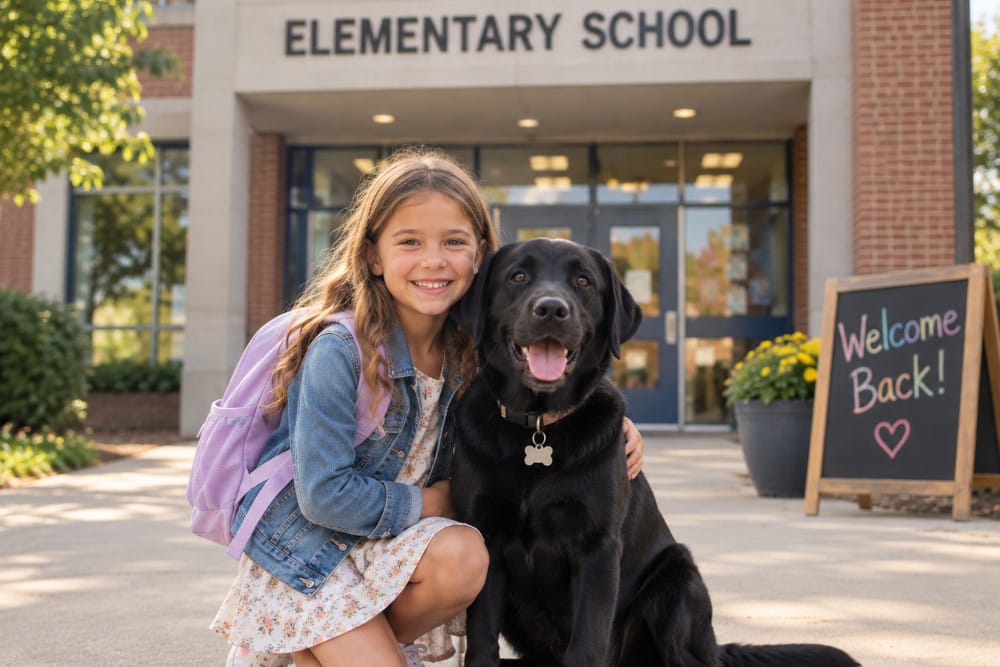
Dogs view their family as their pack, and when a member of their pack is suddenly gone they can have a hard time adjusting. If you’re looking for a way to give your pooch some TLC during the back-to-school adjustment period, mobile pet grooming may be the perfect solution. At Primped Pooches, our professionally trained pet groomers will give your pup the extra care, comfort and one-on-one attention while they’re getting used to a quieter home.
After a summer of open doors, extra walks, road trips and someone always home, your dog just watched everybody leave at 7:15 in the morning. No one explained it to him, and from where he’s sitting, his people vanished.
This is where back-to-school separation anxiety comes from. It can hit North Texas dogs hard, as one day your dog will have frequent company, then the next they’re facing an empty house from morning to well after noon.
The good news is that this stress can be addressed, and most of the fix is done by rebuilding a routine your dog can predict.
Why Back-to-School Affects Dogs so Much
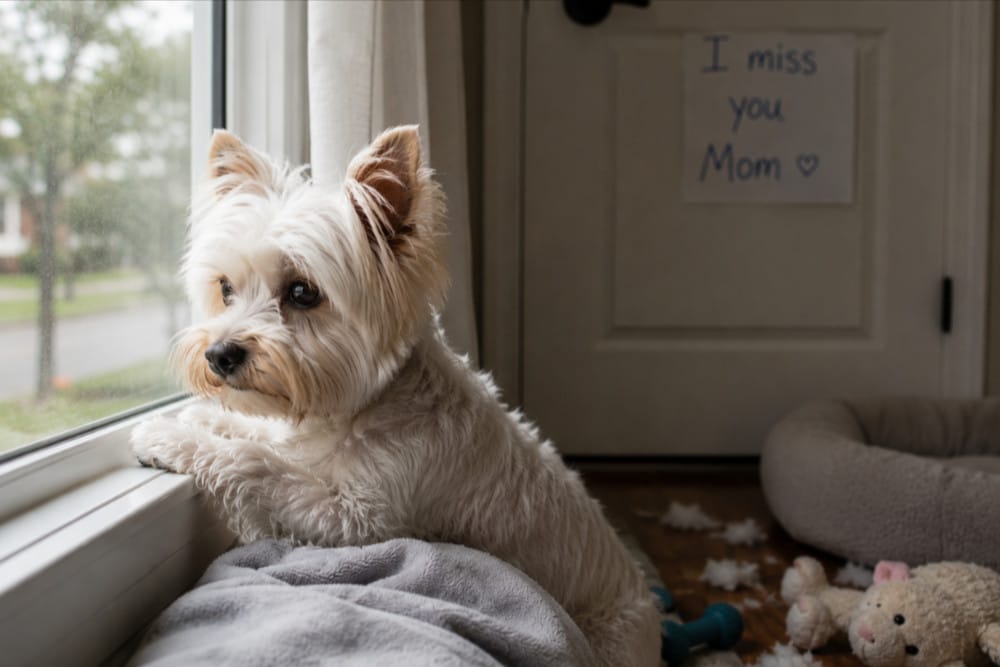
Dogs run on patterns… they notice the alarm going off earlier, and they notice lunch no longer happens at noon. They absolutely notice when four people reach for shoes at the same time. Over the summer your dog probably got very accustomed to conditions like the following.
- Children on the floor in the living room.
- Potty breaks whenever somebody walked past the back door.
- Longer walks and more yard time.
- People in-and-out all day.
- Attention squeezed in between errands.
- A more flexible feeding and sleeping schedule.
When the above patterns change your dog will feel some stress. And here’s the part people miss – the contrast matters more than the hours. A dog who napped happily for 5 hours in May can become very stressed over 4 hours in August, as the drop-off in companionship from the summer routine is so steep.
We see the flip side of this in the van every week. A dog who’s bouncing off the walls at home will settle within 10 minutes of a groom starting, because the appointment is calm, one-on-one, and completely predictable. Same dog, different amount of structure – and structure is usually what’s missing when back-to-school kicks off in August.
If your pup makes his discomfort known, understand that your dog isn’t punishing you for leaving. He just doesn’t know what the new rules are.
What Separation Anxiety for Your Pet Looks Like
Plenty of dogs sleep through the school day without a second thought, while others genuinely suffer. Be aware of three windows of time – the 10 minutes before you leave, the first 20 minutes alone, and the moment you walk back in – and look for behaviors like the following.
- Shadowing you room to room, especially in the morning.
- Pacing or panting the second backpacks and keys come out.
- Barking, whining or howling that starts right after the door shuts.
- Scratching at doors, windows or door frames.
- Chewing furniture, blinds, clothing or anything else near an exit.
- Accidents indoors from a fully house-trained dog.
- Drooling or trembling.
- Trying to get out of a crate, room, yard or house.
- Refusing a favorite treat or food puzzle while alone.
- Greetings so intense they go on for several minutes.
Point a phone or a pet camera at the room and watch what happens after you leave. Most dogs who struggle show it inside the first 15 or 20 minutes, even the ones who looked perfectly calm at the door.
Your groomer may spot it before you do, honestly. Stress shows up in the coat and skin, and we have our hands on your dog for an hour straight. These are some things we might communicate to owners during this time of year.
- Paws licked raw or stained rust-brown from constant licking.
- Thinning or broken coat on the front legs, flank or base of the tail.
- Fresh mats in spots that were clear four weeks ago, usually from chewing.
- Handfuls of coat coming out in an otherwise normal shed cycle, since a stressed dog drops hair fast.
- Flaky skin or new hot spots.
- Nails longer than they should be, because the family’s walking schedule fell apart.
Realize that not every chewed shoe reflects anxiety – boredom looks quite similar. So do medical problems, noise sensitivity, and house training that never quite became a reflex. When your dog’s behavior is intense, came on suddenly or keeps getting worse, loop in your vet or a qualified behavior professional. The ASPCA’s separation anxiety guidance is a solid place to start reading.
How to Rebuild the Routine for Your Furry Friend
A gradual change beats dramatic every time. And even if school started three weeks ago, you can still fix this. You’re just starting from where you are.
1. Move the Morning Earlier, a Little at a Time
If the summer walk happened at 10 a.m., don’t yank it to 6:30 a.m. overnight. Slide it 15 or 20 minutes earlier every couple of days until it lands where the school day needs it.
Earlier is safer here anyway, as pavement in Frisco and McKinney gets hot enough to burn paw pads well before noon in August and September. Put the back of your hand on the sidewalk for 7 seconds. If you can’t hold it there, he can’t walk on it. Plus, a dog who’s already a bit anxious may pant harder in the heat. By planning ahead and taking a few extra steps to protect your pup’s paws, you’ll help keep their feet safe and make walking more enjoyable.
A new school morning rhythm might look like this.
- A sniff-walk before the bus, not a speed march.
- Breakfast after the walk.
- A real rest period while the house is still busy.
- One quick potty break right before everyone leaves.
- Indoor enrichment saved for the hottest part of the afternoon.
Let him sniff. Ten minutes of nose work tires a dog out more than 20 minutes of fetch, and it leaves him settled instead of wound up.
2. Practice Leaving
Start absurdly small. Walk out the front door, come back in 5 seconds, act like nothing happened. Do it again. Build to 30 seconds, then a minute, then 5.
You are not testing how long he can white-knuckle it. You’re teaching him that you leave and come back and nothing bad happens in-between.
If he starts barking, pacing, scratching or won’t take food, you went too far too fast. Drop back to a shorter absence and slow down.
Keep it boring on both ends. Pick up your keys, hand him something to do, walk out. No big goodbye speech. When you come home, wait for 4 calm seconds before you greet him, or you’ve just taught him that your return is the most exciting event of the day.
3. Set Up the Spot He Stays In
Keep him indoors with real air conditioning during the school day. An anxious dog left outdoors in the Texas heat is at risk of overheating, burning his pads or getting fence injuries. Pick somewhere he already likes. A bedroom, a gated section of the living room, a favorite mat near a window but not directly in front of it, since watching the street can agitate some dogs more than it soothes them.
Choose a spot out of direct afternoon sun stocked with fresh water, and remove any toys or other objects he could swallow.
If your dog shows great discomfort, nervousness, and panics in a crate or tries to force his way out, do not crate him—crating a dog is not the universal answer. A truly distressed dog can crack teeth, tear nails and shred paw pads trying to escape, and we have seen every one of those on the grooming table.
4. Use Enrichment on Purpose
A stuffed food toy, a lick mat, a puzzle feeder – all good. Test them during your short practice departures first so you know he can use them safely without you there.
If he won’t touch a favorite treat once you’re gone, take that seriously. That’s a dog whose stress level is past the point where a food toy fixes anything.
Rotate toy options instead of leaving everything out. A special thing that only appears when the house empties out becomes part of the routine, and eventually the cue that everything is fine.
Where Dog Grooming Fits In
Let’s be straight about this – a grooming session does not cure separation anxiety, and anyone telling you otherwise is selling something.
Dog grooming does put one more predictable, calm, positive thing on your dog’s calendar during the exact stretch when everything else about his week changed. And for many dogs, this matters more than people might realize.
Our Mobile Van Removes Stress
Think about what a traditional grooming appointment asks of an anxious dog. A car ride in August heat, a lobby full of strangers and barking, then possibly hours in a kennel waiting for his turn. For a dog that’s already unsettled about being left places, that’s a rough afternoon.
Our mobile dog grooming takes place in your driveway. Your dog will walk from his own front door into a climate-controlled van. For his appointment he enjoys the attention of a single groomer from start to finish, and when his groom is complete, his home is right there. No travel, no lobby and no other animals—no waiting!
A Regular Groom Provides Structure
Everything we suggested above is about giving your dog a schedule he can count on. A standing grooming appointment is part of that. Same groomer, same van, same routine, roughly the same interval of time between grooms. Dogs relax with repetition, and the pups we see every 6 weeks handle their appointments noticeably better than the dogs we see only twice a year.
Our groomers read the small cues and adjust. For example, is this pup tense about his feet, and how does he react to the dryer? This pup is signalling to slow down a bit. Noting and responding to what a dog is showing you requires the kind of attention that’s only possible when your dog is the only canine in the room.
Anxiety Creates Pet Grooming Problems
This loop is real and we watch it happen every fall.
A stressed dog licks and chews. On a doodle or for any curly coated breed, that chewing will pack the hair into mats, usually on the legs, chest and behind the ears. Tight mats pull at the skin, and the discomfort makes him chew more. Meanwhile the family is walking less because mornings are jam-packed, so the nails get longer, and unfortunately this changes how a dog stands and walks, putting undue pressure on the joints.
Now you’re several weeks into the household’s new schedule, and your dog is anxious and physically uncomfortable. Catching these issues when they first develop is easier on your dog and also less expensive to remedy. As too-long nails continue to grow and a coat develops more mats, waiting longer just causes more discomfort. With heavy matting, sometimes the best option is to go with a short haircut and grow it out from there.
Time Dog Grooming Appointments Around the School Week
Families handle this two ways, and both work.
Some appointments will be booked during the school day while a parent is working from home, so the dog gets a structured hour in the middle of what would otherwise be the loneliest stretch. Others book evenings or weekends when the house is full, and the day already feels normal.
If your dog is deep in the anxious phase right now, the second option is usually the gentler one. Get him through a few good grooms with his people around, then move to school-day appointments once he’s steadier.
When to Stop Troubleshooting and Call Your Vet
Getting to the bottom of some of these behaviors is beyond a groomer’s expertise. Call your veterinarian if your dog demonstrates the following.
- Hurts himself trying to escape.
- Can’t settle even during very short absences.
- Stops eating or drinking when alone.
- Has repeated accidents despite being house-trained.
- Drools heavily, trembles or paces frantically.
- Changes behavior suddenly with no obvious trigger.
- Is still struggling after several weeks of consistent routine work.
A vet can rule out the medical causes that mimic anxiety and tell you whether your dog needs a structured behavior plan, medication, or a referral to a veterinary behaviorist. Real separation anxiety is a treatable condition, not a personality flaw.
One more thing, and it matters. Don’t punish the accidents, the chewing or the barking. Those are distress signals, not defiance. Punishing the dog will make them more afraid of being alone, and more anxious about what happens when you get home – the exact opposite of everything you’re working towards.
Ease Your Dog Into the Back-to-School Routine
Your dog doesn’t have to spend every weekday feeling abandoned.
Shift the schedule gradually. Walk while it’s still cool out. Practice short departures until they’re boring. Make his spot comfortable. Watch what he actually does instead of guessing. Keep the good, predictable things on the calendar, grooming included.
And remember, your dog isn’t being difficult – he’s telling you the new routine is hard. Once it stops being new, it usually stops being hard.
Book a Calm Groom in Frisco, Plano, Allen or McKinney
If your dog is due for a session and the last few weeks have been rough on him, a quiet one-on-one grooming appointment in your own driveway is an easy win. Primped Pooches has been bringing skilled dog grooming to North Texas driveways since 2017. New clients get 15% off the first groom with code NEW15. Book a grooming appointment online or call 214-817-0362 today.


